A window into Gloucestershire’s Neolithic past lies just outside the village of Uley. For many years the burial mound was a source of local superstition, known as Cold Harbour, a name given to a refuge for vagrants. Following a surge of interest in antiquities in the 17th century, it was renamed after Edith Pegler, whose family owned the land surrounding the barrow.
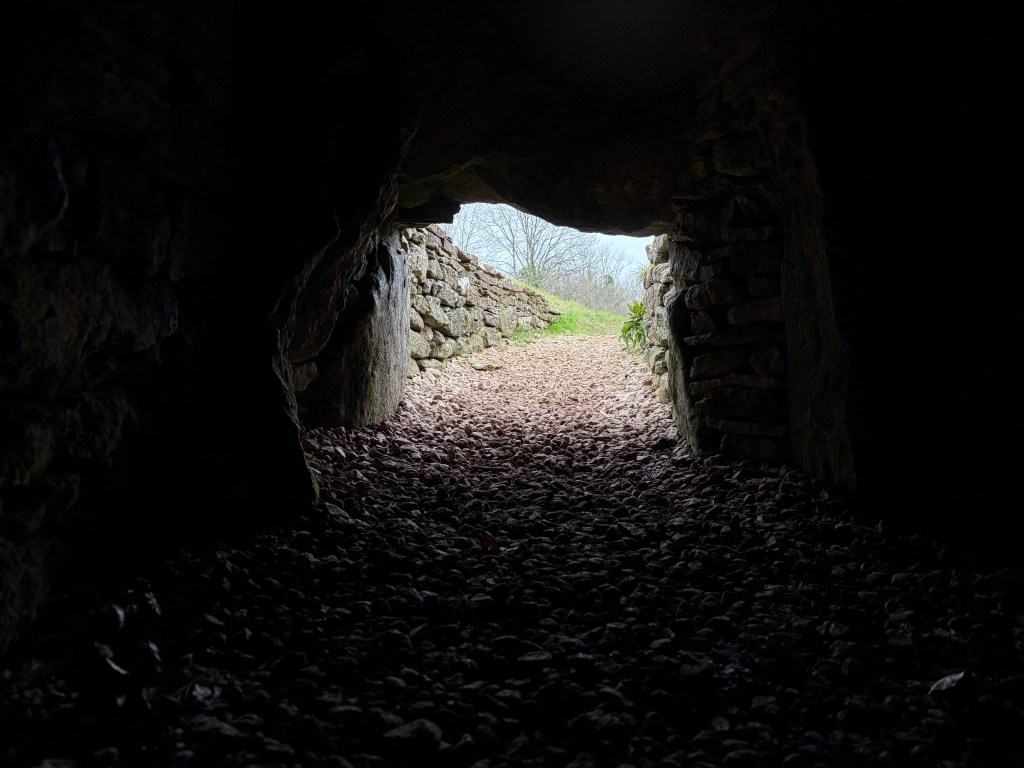
The atmosphere of the site is palpable on the short approach from the roadside and despite significant damage to the structure over time, it remains one of the best examples of a Neolithic burial chamber in the region and one of the few you can step or rather crawl inside.

The site is also known as the Uley Long Barrow and is an example of a transepted gallery grave, consisting of small chambers leading off a main passage, although only three of these remain accessible today. Its hilltop setting towers above the Severn Vale with clear views across to the Forest of Dean and beyond.
The burial mound dates to around 3800 BC and is of similar construction to other Cotswold-Severn barrows in the region. The chambers were built with large slabs of local stone and enclosed by a cairn, later covered by earth and vegetation.
The Cotswold barrows are typically trapezoid in shape with a horned entrance and forecourt, which may have been the focal point for burial ceremonies. It is thought that the inner chambers could represent the womb of the earth goddess with the rite of interment symbolising the return to the earth.
Long barrows became more common as nomadic populations started to settle and cultivate the land. Given so many are in prominent positions in the landscape, it is possible they were used to mark territory as much as they were for burial and ritual.
Today, Hetty Pegler’s Tump seems a suitable place for quiet contemplation and the many offerings present at the site suggest people continue to practice personal rituals here, drawing new meanings from this ancient site.
Visiting Information
There is some parking in a small layby directly opposite. Alternatively, you can walk along a footpath from the nearby Coaley Peak car park, where the Nympsfield Long Barrow can also be visited.
 Strange Stroud
Leave a comment