Stroud prospered from its textiles industry for centuries. Sheep were grazed on the side of the valleys whilst mills were constructed along their floors to harness the power of the landscape. The industry was accelerated by the construction of the canal and railway networks, connecting Stroud to major cities and global trade.
The town’s famous scarlet cloth was in high demand, fuelled by the colonial conflicts of the British Army or so called Redcoats. This was big business for the mill owners, yet pay and working conditions remained poor for the weavers and clothiers they employed.
In 1825, thousands of workers took part in a series of strikes in protest against falling wages and poor living standards. As negotiations stalled, workers took matters into their own hands, downing shuttles and abandoning looms before seizing unfinished cloth. As they marched along the canals, those opposing the strike were given a ducking in the water, including some of the mill owners.
These events came to be known as the Stroudwater Riots and many of those taking part in the collective action were punished with some imprisoned and sentenced to hard labour. The recent bicentenary of the riots presented an opportunity to commentate this important piece of local history with a novel ritual.
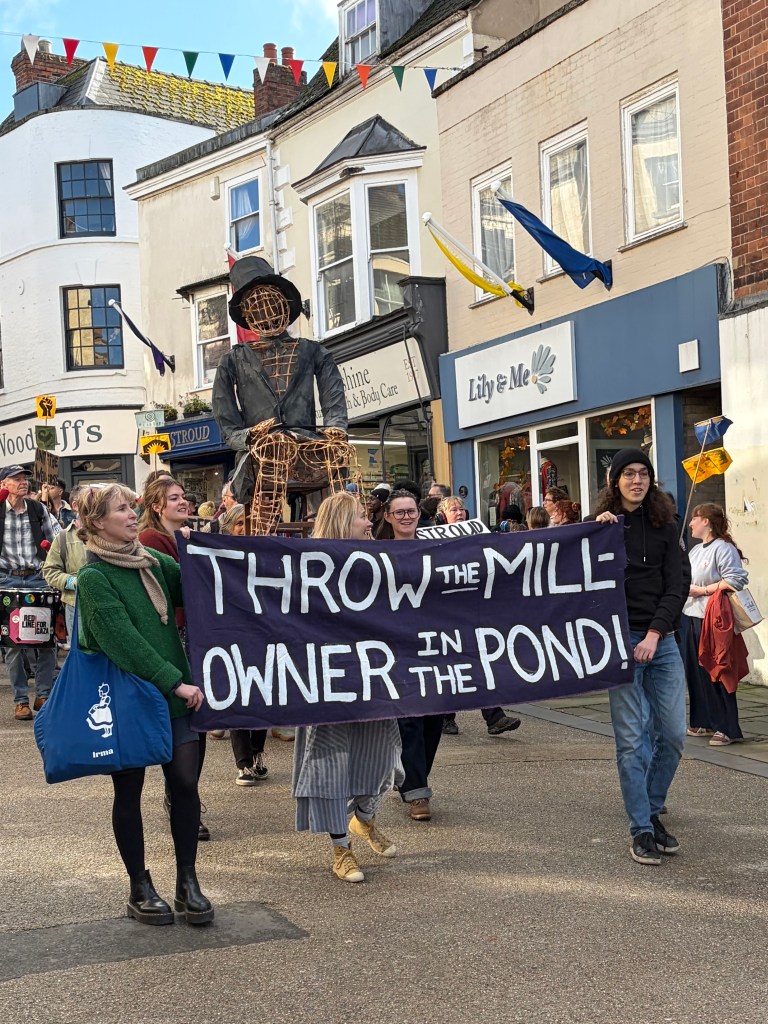
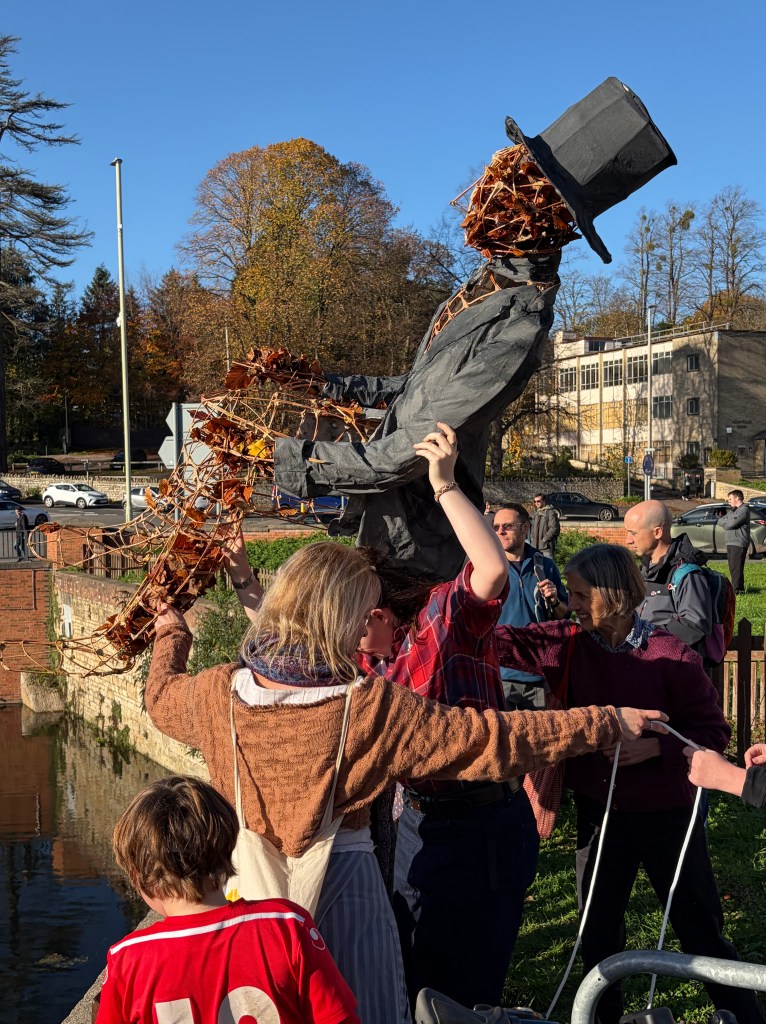
Led by the Radical Youth Space for Educations (RYSE), the names of the sentenced workers were read aloud along with the punishments they received. A wicker effigy of a mill owner was then paraded through the town, ready to be thrown into the canal at Wallbridge.
Those attending were encouraged to take an autumn leaf and think of something or someone they would like to see “thrown in the pond.” The leaves gradually filled the effigy before it entered the water to cheers and applause.
200 years ago, the ducking of mill owners sent ripples far beyond the five valleys and the Stroudwater riots were one of many events that preceded the national trade union movement.
The mill workers of the past may recognise many of the struggles facing workers today. They remind us of the power of collective action in the face of those seeking to profit from the exploitation of others.
 Strange Stroud
Leave a comment