Situated in an enclosure opposite the Gatcombe Estate, this standing stone is rich in superstition and folklore. Its origins are unclear and open to speculation, shrouding the stone in mystery.
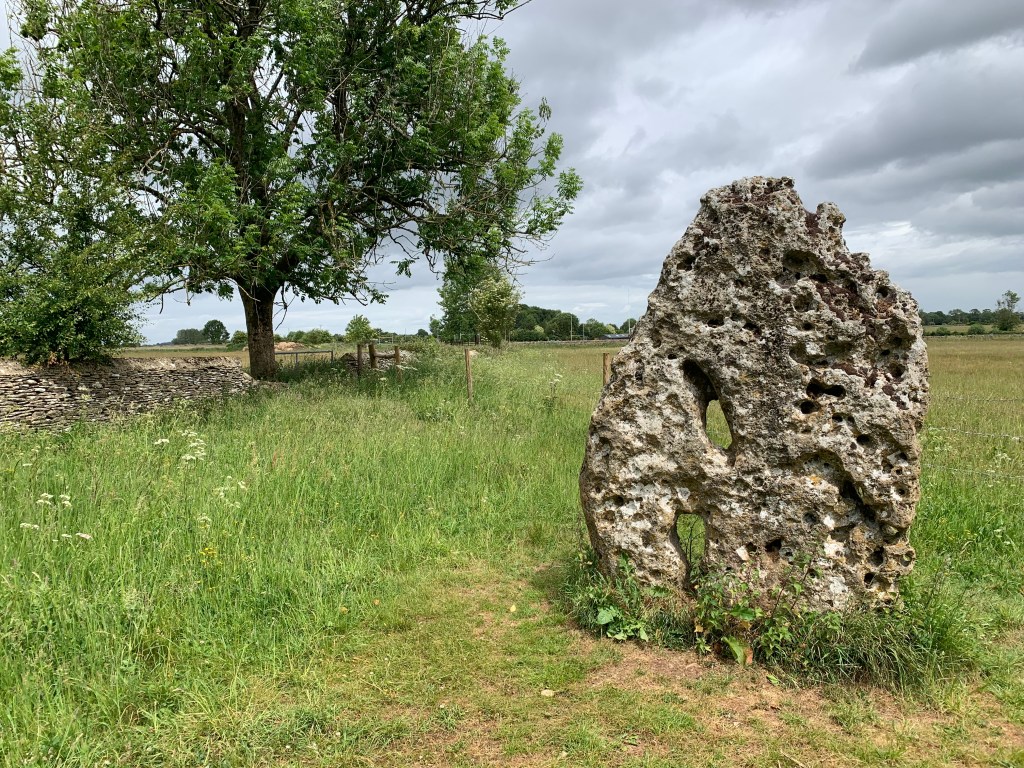
Some suggest the stone may have initially formed part of a chambered tomb, the final resting place of a Danish warrior killed in battle at nearby Woefuldane Bottom. Although no archaeological evidence has been found to support this, the story remains compelling.
Others claim the stone was in place during the famed battle and that soldiers shot arrows through the holes in the limestone, before being defeated by the Saxons. Barrows have been discovered across the landscape along with many arrow heads and flints.
In more recent history, local people would visit the stone for its healing properties. This is common to many holed monuments and at Minchinhampton is was said that passing an infant through the holes in the monolith could cure common childhood ailments.
Indeed the power of the stone is so great that any attempts to remove it from the earth have been without success. The stone is said to move only according to its own will and is rumoured to run around the farmer’s field when the church clock strikes midnight.
A smaller standing stone is embedded in the adjacent drystone wall and may have originally formed a pair. Some maintain that the stones were relocated from a nearby woodland, an area known as the Devil’s Churchyard.

The churchyard gets its name from a story about an old stone circle. A local vicar, hoping to convert the people of Minchinhampton to Christianity, set out to build a new church on the ancient site, but construction work was constantly vandalised during the night, some say by the Devil himself.
The church was eventually sited elsewhere in the village but cautionary tales about the Devil’s influence persisted. The following was recounted in warning to those tempted to break the Sabbath:
There was once a man who used to go nutting on Sundays. As he was going down Half-mile Lane that leads to the Devil’s Churchyard he stretched out his hand to a fine bunch of nuts, saying, ‘here goes one’ then to another, saying, ‘here goes two’ and a black hand was stretched out from the other side of the hedge, and it grabbed the man, with ‘here goes three’ in a terrible voice. So he died, and was buried at the Devil’s Churchyard, for the black hand belonged to the Devil.
The number of stories attached to the longstone and its surroundings make it one of the most intriguing monuments in the area and one that is well worth a visit.
Visiting Information
The stone is located approximately one mile along the road from Minchinhampton to Avening. The enclosure is easily visibly from the roadside.
Refreshments can be found nearby at The Ragged Cot, a historical inn with a reputation for hauntings.
 Strange Stroud
Leave a comment