A Scandinavian tradition has found popularity in the Stroud Valleys. Saint Lucy’s Day is a celebration of light during the darkest time of the year, blending pagan and Christian traditions around the time of the winter solstice.
Before the adoption of the Gregorian calendar, the solstice was marked on December 13th and the longest night of the year was approached with caution. It was believed that spirits and demons could roam the earth freely, led by Lussi, a female figure with supernatural powers.
Families would come together for protection, sharing food and drink by candlelight. Cinnamon buns were served in the shape of cats (Lussekatter) and were believed to ward off evil spirits. The household would stand vigil throughout the night to ensure safety from any unwanted visitors.
Lussi has also been associated with the story of Lilith or Adam’s first wife, who having been created as his equal, refused to lead a subservient life and was exiled from paradise. The antithesis of Eve, Lilith was demonised for her disobedience but has since become a symbol of female empowerment.
As Christianity spread across Europe, the Church incorporated existing pagan rituals into a new celebration to mark the longest night. Lucia processions as they are known today were first recorded in Sweden in the 18th Century.
Saint Lucia of Syracuse was chosen as patron of the day, a young woman who was martyred after refusing to renounce her faith to marry a pagan nobleman, instead pledging her dowry to help the poor. Before meeting a gruesome end, she is said to have brought food to Christians hiding beneath the city in catacombs, lighting the way with a candlelit wreath atop her head.
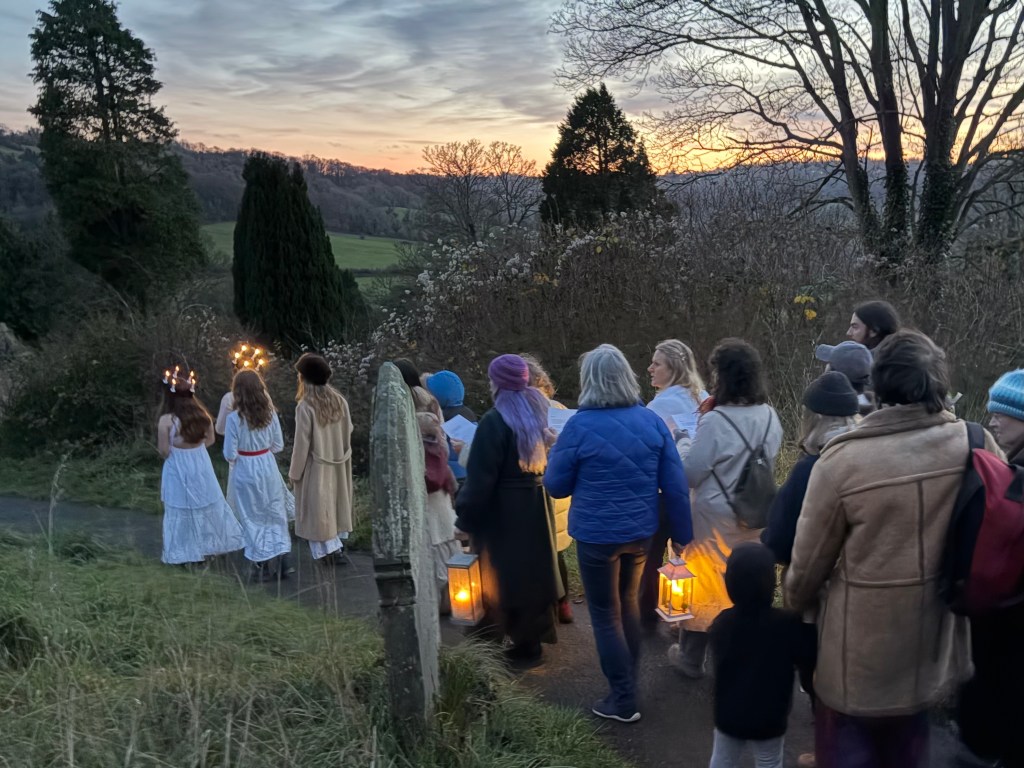
Symbols of this story are clearly referenced in Lucia Day celebrations, led by young women wearing white gowns, red sashes and crowns of candles. Other festive characters and revellers follow their lead, joining the traditional chorus:
Hark though the darksome night
Sounds come a winging
Lo ‘tis the queen of light
Joyfully singing
Clad in her garment white
Wearing her crown of light
Santa Lucia, Santa Lucia
Maiden so sweet and fair
Bright candles in your hair
Santa Lucia, Santa Lucia
The celebration in Stroud involves a lantern lit procession from the Chapels of Rest to the Trinity Rooms, followed by an evening of food, drink and music, incorporating the more Celtic traditions of carolling and ceilidh.
The modern Lucia draws on a rich and varied mythology, referencing themes of both light and darkness. It is a celebration of hope and community in the depths of winter and a welcome addition to the Stroud calendar.
 Strange Stroud
Leave a comment