Rising from an elevated position on Bisley Road, the Chapels of Rest are a landmark visible across the golden valley. The gothic structure sits within a large Victorian Cemetery that first opened its gates in 1854, built to offer a solution to the overcrowding of local churchyards.
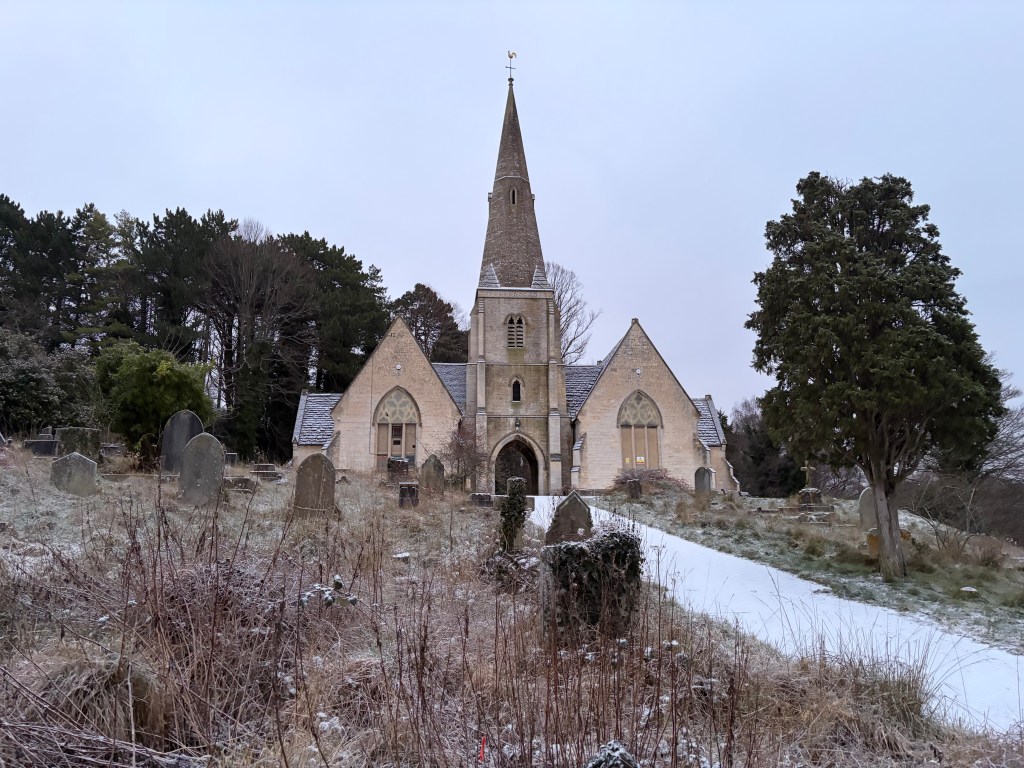
Two chapels were erected side by side and joined by an entrance lodge, from which the central spire ascends. The north chapel was reserved for the Church of England and the south was used by non-conformists. It’s been suggested that the decorative carved heads on the north side depict royalty whilst the south carvings mockingly represent common folk.
The graveyard itself was also segregated in this way with a third section set aside for paupers, who were buried in unmarked graves. The first person to be interred was William Lewis, a local man who died in the Stroud Union Workhouse located just across the road. Many forgotten legacies lie beneath the soil, those of workers who quietly shaped the history of Stroud.
Octagonal stone markers discretely map the boundaries of such plots and give some indication as to where these folk were buried. The octagon may have been chosen intentionally as a symbol of regeneration and eternal life. In the Christian tradition, it is linked to the resurrection of Christ on the eighth day.
Elsewhere in the cemetery, the wealthy and more reputable members of society received visible commemoration through elaborate monuments erected to signify social status and celebrate contributions to civic life. Notable local residents include MP George Holloway and businessman William Cowle.
The Victorians were known for their strict moral code and repressed emotion, yet the ritual of mourning was a very public affair, governed by complex social etiquette. Stroud cemetery was designed with this spectacle in mind and it is easy to picture the bereaved promenading along the meandering paths.
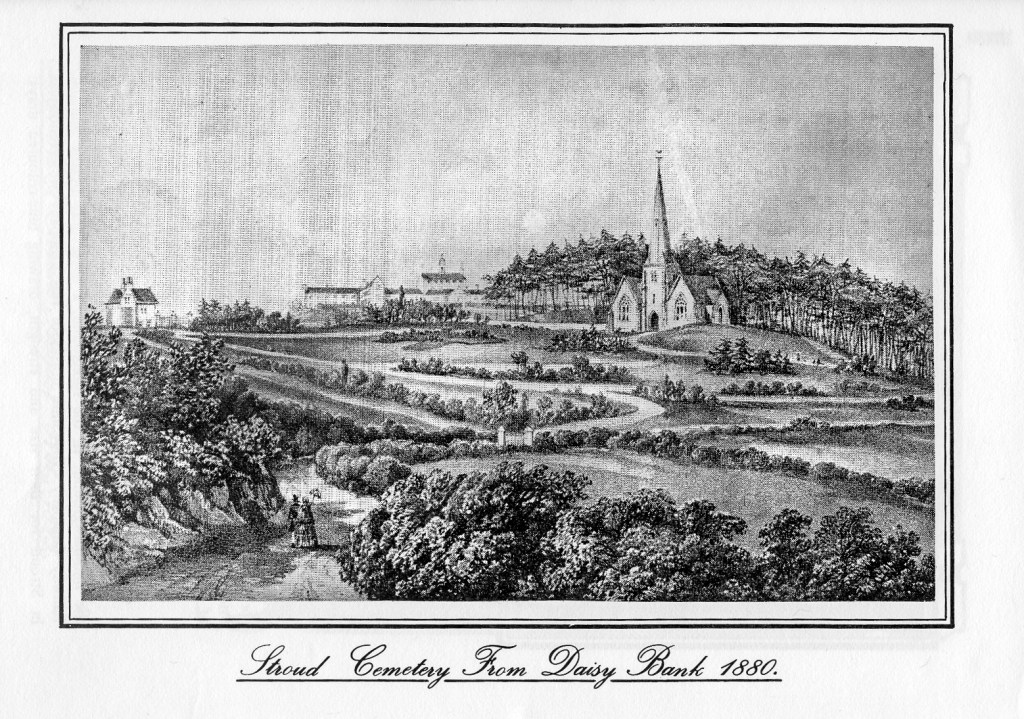
Since the turn of the century, the cemetery has been managed as a nature reserve with its south facing position creating an ideal grassland habitat for a variety of flora and fauna.
During the warm summers months, lizards scurry between headstones and the occasional adder can be spotted warming itself in the sun. Those brave enough to visit after dark may spot bats circling overhead and glow worms clinging to the long grasses.
An area of woodland was cleared for the construction of the cemetery. Known as The Conygear, the name translates as rabbit enclosure, a place where the animals were likely bred for food. It seems fitting that nature is now slowly reclaiming the land, albeit it in a way that is carefully managed.
The Chapels themselves are also undergoing significant change. After years of resting in a semi-derelict state, the Stroud Preservation Trust has been granted the responsibility to oversee essential restoration work. It is hoped that the buildings can once again be used by the local community as a space for ritual and reflection.
 Strange Stroud
Leave a comment