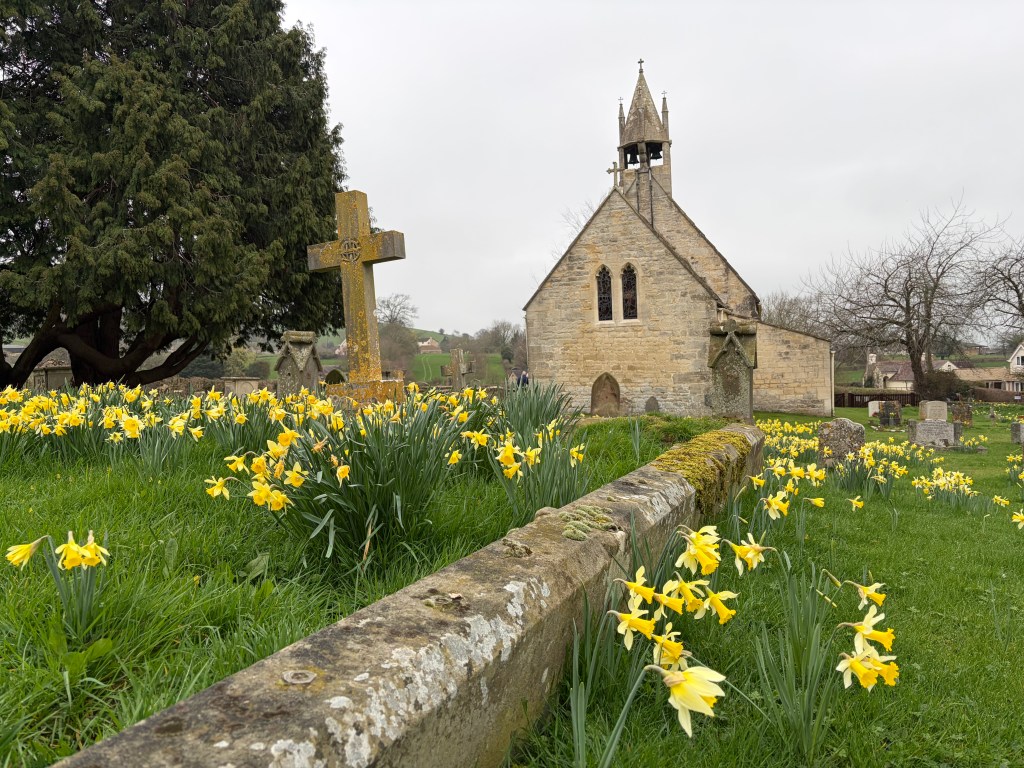
Harescombe parish church is home to a host of golden daffodils, celebrated during a weekend festival in early March. These miniature trumpets sound a fanfare for the arrival of Spring, a time of hope and renewal. Their fleeting presence signifies new beginnings and the promise of brighter days ahead.
Daffodils belong to the genus narcissus, so named after the Greek myth of the handsome youth who, believing his beauty to be superior to any other, was tricked into falling in love with his own reflection in a pool of water. Captivated by his own form, he wasted away until a beautiful flower emerged in his place, its golden petals mirroring his delicate features, a warning against vanity and arrogance.
Daffodils originate from the Iberian peninsula and were likely brought to Britain by the Romans, who planted the flowers to commemorate fallen soldiers and offer hope of life beyond death. Daffodils were said to possess some healing properties but are also known to be readily toxic.
Their association with death may originate from another Greek myth, that of Persephone, who was sent to pick daffodils in a meadow before she was abducted into the underworld by Hades. The daffodils continue to bow their heads in sorrow for their role in her entrapment.
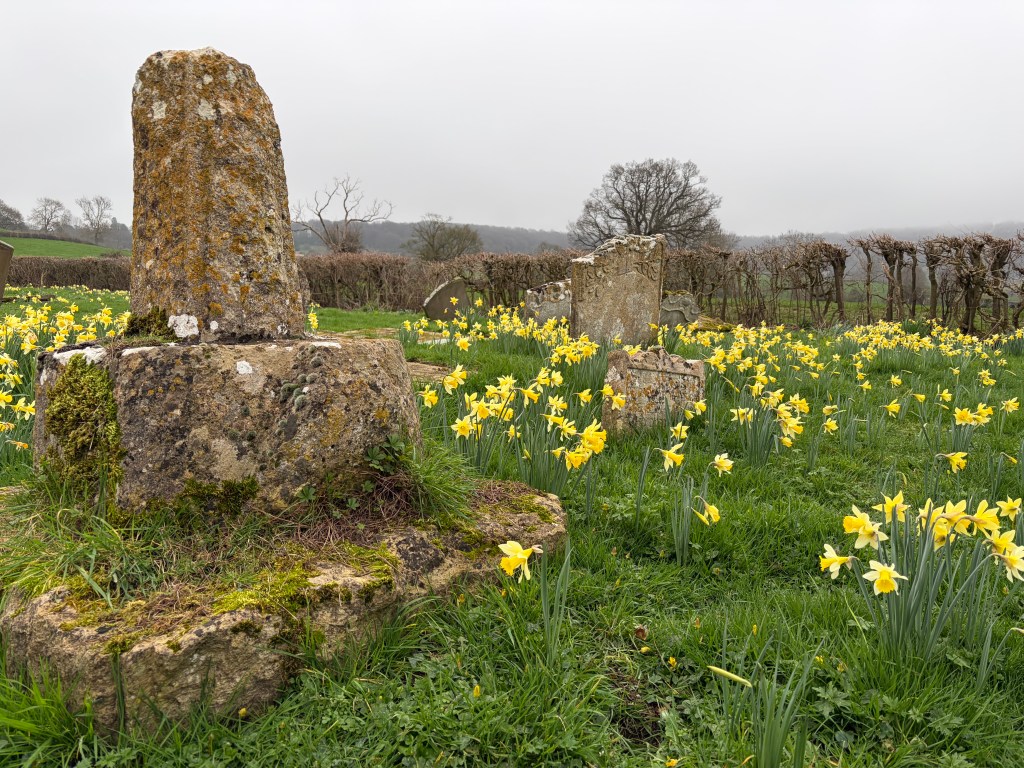
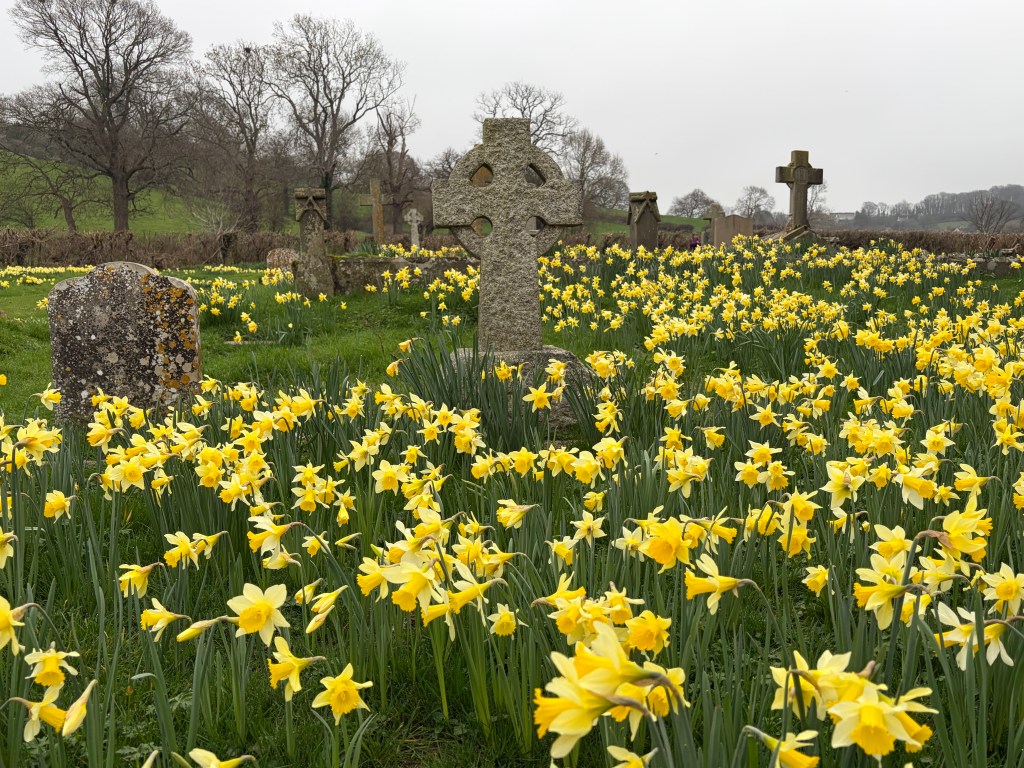
At Harescombe, the daffodils encircle the historic church in a sea of yellow. The building was consecrated in 1315 after an earlier twelfth century chapel was replaced. One of the church bells is thought to date from this period and is said to be the oldest in the whole of Gloucestershire.
Daffodils have inspired many writers from William Wordsworth to Oscar Wilde. The church is known to have been visited by Beatrix Potter in 1894 while she was staying with her cousin nearby. In her journal she writes about the “curious belfry and handsome Saxon font,” as well as commenting on some medieval graffiti etched into the stone porch. A local story about a tailor whose work was completed by faeries at night inspired her to write her own version.
Daffodils too have an association with faeries in folklore, with the flowers becoming a sanctuary for the creatures during times of peril. For this reason, it is said to be bad luck to step on a daffodil, lest a resting faerie be disturbed. Gifting a bunch of daffodils however is said to bring good luck and happiness.
Daffodils are widely celebrated during the spring time. In Wales, they are worn close to the heart on St David’s Day (1st March) as a symbol of hope and national pride. In Chinese culture, their arrival coincides with the lunar new year and bringing them into the home encourages good fortune and prosperity.
With the fatal error of Narcissus in mind, daffodils remind us to pause and search inwards. Self reflection can provide a clearer direction of travel as the year starts to gather momentum with the renewed energy of Spring.
Now the full throated daffodils,
Our trumpeters in gold,
Call resurrection from the ground,
And bid the year be bold.
Cecil Day-Lewis (1931)
 Strange Stroud
Leave a comment