The River Severn begins her long journey high on the slopes of the Cambrian mountains. According to welsh legend, the river was formed by the giant Plynlimon, who was filled with sorrow by the lack of life in the surrounding landscape. The giant’s tears became three water spirits known as Wye, Rheidol and Hafren. The sisters began to dream of open water and each set off along different routes to the sea, carving the paths of their rivers as they went.
The Rheidol took the shortest and most direct route whilst the Wye leisurely meandered through the countryside. Hafren had the furthest to travel, passing through many border towns, where she was bestowed the english name Severn. By the time she formed the Severn estuary, she had become the longest river in the British Isles with waters that are worshipped and feared in equal measure, not least for the natural spectacle of the Severn Bore.
Upon reaching Gloucestershire, the Severn becomes tidal, in fact she experiences one of the largest tidal ranges in the world. On an incoming tide, the rising water sometimes forms a surge known as a bore. As the tide is funnelled up the estuary, the river begins to reduce in depth and width, forcing water into an ever narrowing space. When the conditions are right, this creates a large wave up to 2 metres in height that travels upstream against the current.
The spectacle is quite the sight to behold and is often most impressive around the time of the Spring Equinox during a full or new moon. A large bore always draws a crowd and settlers along the river Severn will have witnessed the bore for thousands of years. Legend has it that when the Romans came to Gloucestershire, they feared the arrival of the bore signalled the end of the world.
The bountiful waters of the Severn formed an important trade route for the Roman Empire whilst also acting as a natural boundary between England and Wales. The Romans named the river Sabrina, replacing an earlier Celtic name Samarosina or “the land of summertime fallow.”
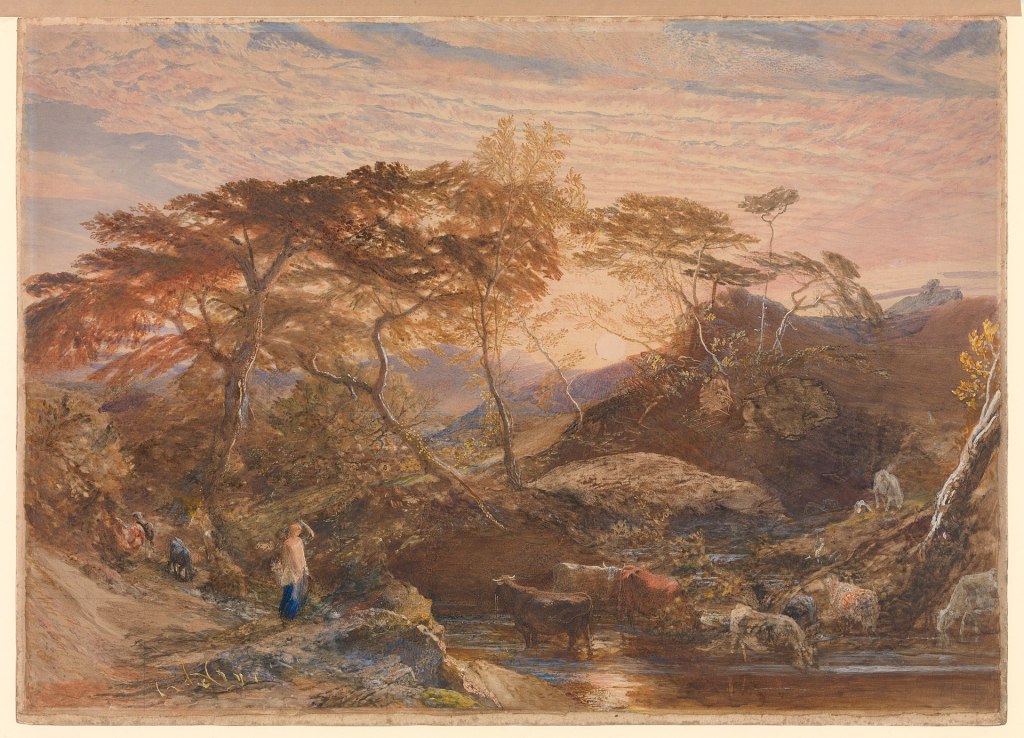
The story of Sabrina was later chronicled by Geoffrey of Monmouth in the 12th Century. He writes that Sabrina was the illegitimate child of the English King Locrin, who fell deeply in love with a Germanic princess, Estrildis, after she was captured in battle during an invasion by the Huns.
Locrin kept his lover secret from his wife Gwendolen, the daughter of the King of Cornwall. He later cast her aside in favour of Estrildis but Gwendolen was filled with rage at his betrayal and raised an army against him. Estrildis was killed and her daughter Sabrina was drowned in the river that would take her name forevermore.
This legendary tale immortalised Sabrina as the goddess of the river and perhaps the bore can be considered a display of her power. Her waters are prone to overspill the banks that contain them and early settlers of the river would have known this danger all too well. Sabrina could support a bountiful harvest or bring destruction and ruin should the mood take her. To this day the river regularly floods the surrounding land and mortal men remain at her mercy.
The crowds turning out to witness the bore, as well as those brave enough to surf it, can marvel at the power and beauty of this natural phenomenon. The legend of the river, whether Hafren, Sabrina or Severn, illustrates our deep connection to the water. Robert McFarlane writes that “rivers run through people as surely as they run through places” and reminds us that our very existence depends upon their protection.
As it stands, all three of Plynlimon’s daughters are threatened by pollution and the historical mismanagement of our precious waterways. This worrying situation is becoming more desperate. It has never been more important to honour our rivers and the stories they hold, before it is too late.
Visiting Information
A good spot to witness the bore is at Minsterworth. Several factors determine a good bore and they are graded using a rating system.
 Strange Stroud
Leave a comment